EKM-Logo   Institut für Physik   Universität Augsburg

Theoretical Physics III

Vollhardt's group

> Homepage
Group Members
Areas of Research
Publications
Bachelor Theses
Diploma Theses
PhD Theses
Habilitation Theses
Lectures and Seminars
Talks

Kampf's group


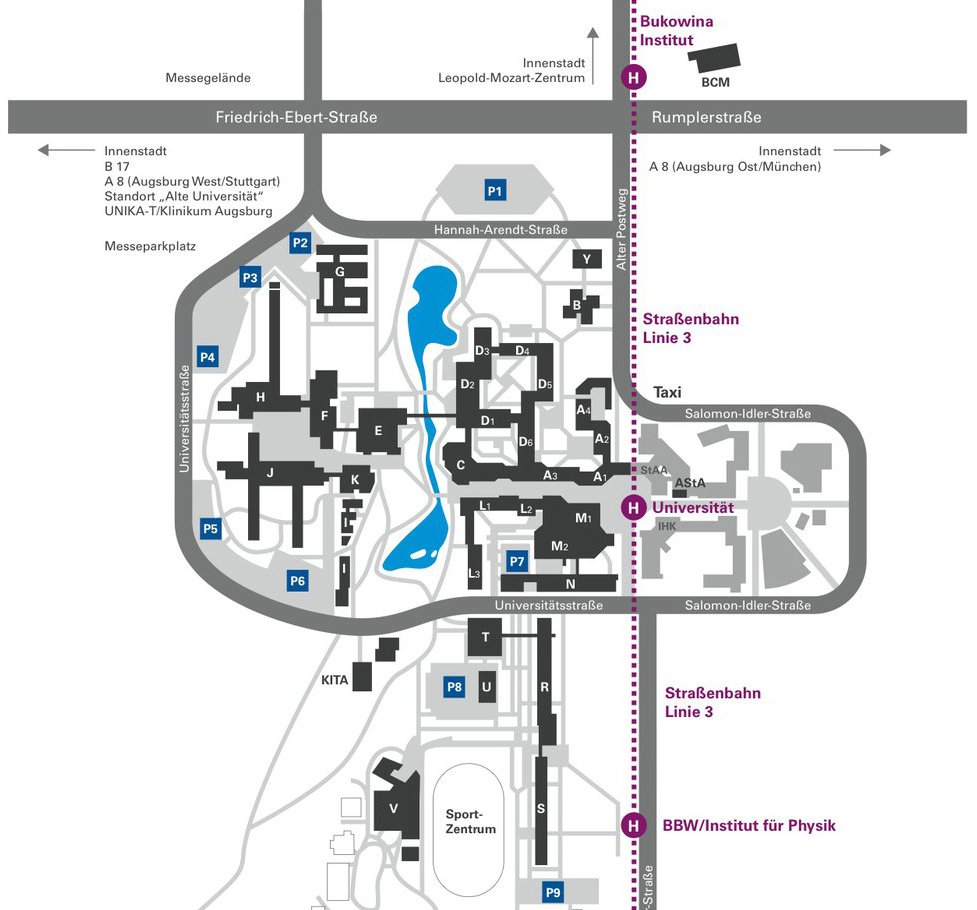
How to get here
Computing Info
Helium3 Kalkulator

German version


Sonderforschungsbereich 484
Center for Electronic Correlations and Magnetism (EKM)
Department of Physics
Augsburg University


Webmaster
 

Prof. Dr. Dieter Vollhardt

Max-Planck-Medal 2010
of the German Physical Society


Chair in Theoretical Physics
Center for Electronic Correlations and Magnetism
Theoretical Physics III
Institute of Physics
University of Augsburg
D-86135 Augsburg
Germany

Office Office: 4A 408, EKM-Building

Phone Phone: +49 - 821 - 598 - 3700

 
Mailbox Email: Dieter.Vollhardt@Physik.Uni-Augsburg.DE

Scientific Curriculum Vitae

During 1971-1976 Dieter Vollhardt studied physics at the University of Hamburg. From 1976 to 1979 he worked with Professor Kazumi Maki at the University of Southern California in Los Angeles on the theory of critical currents in superfluid Helium 3 - the topic of his Diploma Thesis (1977) and his Doctoral Thesis (1979) at the University of Hamburg. From 1979 to 1984 Dieter Vollhardt was Research Associate of Professor Peter Wölfle - and from 1984 to 1987 a Heisenberg-Fellow of the Deutsche Forschungsgemeinschaft - at the Max-Planck-Institute for Physics and Astrophysics (Heisenberg-Institute) in Munich. During this time he also stayed at various research institutions in the US, among them, in 1983, the Institute for Theoretical Physics, Santa Barbara, and the Bell Laboratories, Murray Hill. In 1984 he completed his Habilitation at the Technical University of Munich. In 1987 Dieter Vollhardt took over the Chair for Theoretical Physics C, and was appointed Director at the Institute for Theoretical Physics, at the RWTH Aachen (Aachen Institute of Technology). In 1996 he accepted the offer for a new Chair for Theoretical Physics on Electronic Correlations and Magnetism at the Institute for Physics of the University of Augsburg. (Curriculum Vitae)

Dieter Vollhardt's areas of research are the theory of electronic correlations and magnetism, e.g., the realistic modelling of strongly correlated materials (see Physics Today, March 2004), disordered electronic systems, and normal and superfluid Helium3. He is author (together with P. Wölfle, Karlsruhe) of the book The Superfluid Phases of Helium3 (Taylor & Francis, 1990). As the German representative in Commission C5 (Low Temperatures) of the International Union of Pure and Applied Physics (IUPAP) during 1999 - 2005 he contributed to the book "Physics Now" of the IUPAP published in 2004 which contains reviews of the state of the art in physics.

In 2006 he was awarded the Agilent Technologies Europhysics Prize 2006 of the European Physical Society for the "Development and Application of the Dynamical Mean-Field Theory" (together with A. Georges, G. Kotliar and W. Metzner).

On March 17, 2010, he will receive the Max Planck medal for 2010 of the German Physical Society "in recognition of his significant contributions to the derivation of a new mean-field theory of correlated quantum systems and to the understanding of many-body problems in the quantum theory of condensed matter".

Areas of Current Research

Realistic modelling of strongly correlated electronic systems

We develop and apply the novel computational scheme LDA+DMFT to investigate electronically correlated materials from first principles. LDA+DMFT is based on a combination of conventional methods for computing electronic band structures, e.g., the local density approximation (LDA), with the dynamical mean-field theory (DMFT) for correlated electron systems. The LDA+DMFT approach is employed in particular to calculate photoemission and absorption spectra of transition metal oxides in close collaboration with experimental groups.

Metal-insulator transitions in electronic systems

Phase transitions between metallic, non-metallic, magnetically ordered and non-ordered states in correlated and/or disordered electronic systems are investigated within dynamical mean-field theory (DMFT) plus finite temperature quantum Monte-Carlo techniques (QMC), as well as by the numerical renormalization group and other techniques. Thereby the influence of disorder, frustration and doping on the transitions is studied.

Microscopic theory of magnetism

We investigate the microscopic conditions for the stability of long-range ordered magnetic states in strongly correlated insulators and metals. A broad range of theoretical tools (rigorous methods, perturbation theory at weak and strong coupling, low and high dimensions, variational procedures, quantum Monte-Carlo calculations, numerical renormalization group, etc.) is employed for this purpose.

Correlated electrons in nonequilibrium

The real-time dynamics of correlated electrons are studied using dynamical mean-field-theory for nonequilibrium. This approach can be used in particular to describe pump-probe experiments, in which the sample is excited by a first laser pulse and analyzed with a second laser pulse after a controlled time delay.

Correlated bosonic systems

The properties of correlated lattice bosons are investigated by means of the newly developed bosonic dynamical mean-field theory (B-DMFT). In this approach the dynamic coupling between normal and condensed bosons is explicitly included.

Development of new theoretical methods

We develop analytical and numerical approaches for the non-perturbative investigation of electronic correlation phenomena in quantum mechanical lattice models.

Introductory literature

Elektronische Korrelationen und Magnetismus: Eine Einführung (in German) (html, pdf)
Strongly Correlated Materials: Insights from Dynamical Mean-Field Theory, G. Kotliar and D. Vollhardt, Physics Today (March 2004).

Lecture Notes:
Investigations of correlated electron systems using the limit of high dimensions
Strong-coupling approaches to correlated fermions

see also:
Research topics / Selected publications
Complete publication list (PDF file, 99kb)


URL: http://www.physik.uni-augsburg.de/theo3/index.vollha.en.shtml